
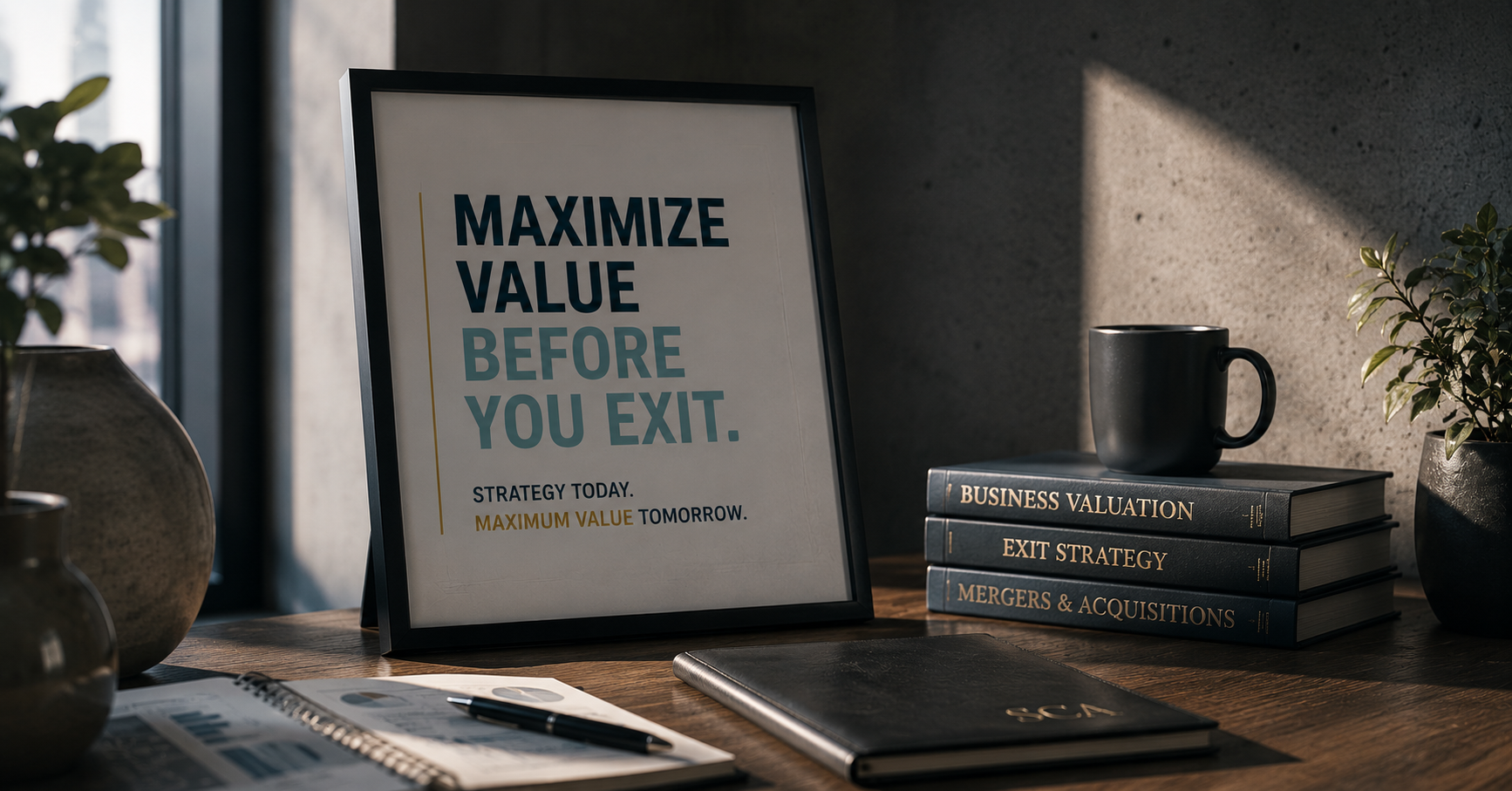
You’ve spent years building something real. Here’s the uncomfortable question: is it built to sell, or is it just built around you?
TL;DR: If you want to maximize business value before you exit, start years (not months) before you plan to sell, and fix the things that make buyers nervous.
What Does It Mean to Maximize Business Value Before You Exit?
It’s not just cranking up revenue and hoping for the best (though that never hurts). It’s about making your company attractive to a buyer who’s never met you and probably never will. Buyers pay up for businesses that run without the owner in the room, that show clean, boring, predictable numbers, and that don’t fall apart if one client walks. We wrote about this exact pattern in Why Buyers Pay More for Prepared Companies, and honestly, it’s the difference between a great offer and a “let’s revisit this in a year” conversation.
When Should You Start Planning Your Exit?
Earlier than you think. Two to five years out is the sweet spot, according to most exit planning research, including the folks at the Exit Planning Institute, who’ve spent decades studying what actually moves the needle. That window gives you time to fix the ugly stuff (bad financials, missing SOPs, one huge client that’s 40% of revenue) before a buyer ever sees your books.
What Are the Biggest Value Killers Buyers Look For?
Owner dependency, hands down. If the business can’t function without you answering the phone, buyers price that risk right into the offer, sometimes cutting the multiple by a third or more, as Forbes recently detailed. Other culprits: messy books, no documented processes, and a customer list that’s really just three people who like you.
How Do Buyers Actually Calculate What Your Business Is Worth?
Most private company sales come down to a multiple of EBITDA (your earnings before interest, taxes, depreciation, and amortization). CFI’s breakdown of the EBITDA multiple is a solid primer if you want the mechanics. But the multiple itself isn’t fixed. It moves based on risk. Lower risk, higher multiple. That’s really the whole game when you’re trying to maximize business value before you exit.
Is Your Business the Right Size for a Private Equity Buyer?
Not every buyer is the same, and size matters more than most owners expect. We broke down what size companies private equity firms typically acquire if you’re curious where you might land.
Do You Need an Advisor to Sell Your Business?
Technically, no. Practically? It’s hard to overstate how much a good advisor changes the outcome. You’re too close to your own business to see it the way a buyer will (nobody can see their own kid objectively either, right?). This is exactly why owners work with a fractional CFO well before a sale, to get the financials buyer-ready and catch problems while there’s still time to fix them.
Here’s the thing nobody tells you early enough: maximize business value before you exit isn’t a task you do in the final months. It’s a mindset you build years ahead, one clean quarter at a time. I’ve watched owners leave real money on the table simply because they waited too long to start. Don’t be that owner.
Ready to figure out where your business actually stands? Talk to our team at Surfside Capital Advisors and let’s build your exit strategy together, before you need one.
